
A recent ACTION study revealed that many patients who develop failure of their Fontan circulation are referred to a heart failure specialist when they are very sick. This can mean that they need a heart transplant or a mechanical pump (Ventricular Assist Device – VAD) very soon after referral, or sometimes they are even too sick and frail to be able to undergo these therapies safely.
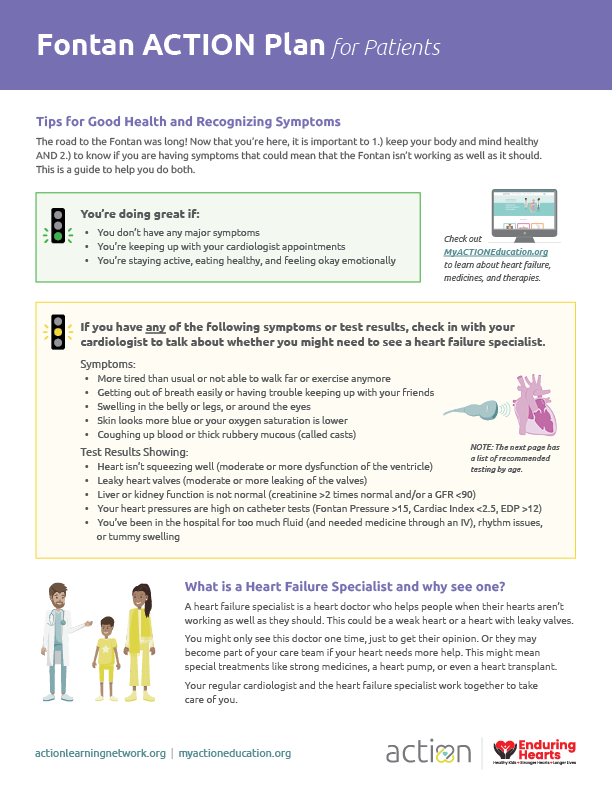
We created the ‘Fontan ACTION Plan for Patients’ to help empower patients with a Fontan, and their caregivers, to take charge of their health and understand potential warning signs that should be examined. The first section has resources that help patients maintain their current state of health with links to exercise, diet, and mental health resources. The second section includes signs or symptoms that should prompt a conversation with a patient and their Cardiologist about whether it might be time to see a Heart Failure Specialist. Finally, we describe what a Heart Failure Cardiologist does and how one might become a part of the Fontan care team.
The goal of involving a Heart Failure Specialist early is to introduce medications or other interventions early, with the hope of reducing symptoms and improving the efficiency of the Fontan circulation. It also allows patients and their families to develop a relationship with the Heart Failure team, rather than meeting them too late and under duress, in case a VAD or heart transplant is needed in the future.
Please share this document widely with your networks and organizations! If you have any feedback to share regarding this resource, email us.
Disclaimer: The ACTION network is focused on quality improvement efforts such as harmonizing best practice protocols, disseminating them among institutions, and helping centers to improve care practices at the local level. This protocol was developed as a consensus tool for pediatric VAD programs. The information in the protocols are based on center practices, individual opinions, experiences, and, where available, published literature. Centers may choose to adapt this protocol to include in their center-specific protocols with reference to ACTION with the understanding that these are meant as guidelines and not standard of care.
