
Harmonized Protocols – Updated!
ACTION now has nearly 40 Harmonized Protocols!
Harmonized Protocols – Updated! Read More »
ACTION now has nearly 40 Harmonized Protocols!
Harmonized Protocols – Updated! Read More »
Through the collection and use of real-world data, the field has gained greater understanding of best practices in care of these patients, as well as improved access to devices with pediatric labeling of devices previously approved only for adults. Recent and current work across the network’s major focus areas (VAD, heart failure, muscular dystrophy, and Fontan) are highlighted.
The use of VADs in pediatric restrictive and hypertrophic cardiomyopathy is rare, but this ACTION multi-center registry analysis highlights that support is feasible, particularly in children with RCM. While the majority of patients were successfully bridged to transplant, outcomes were poorer in HCM patients, especially those requiring BiVAD support.
Let’s make 2025 our best year yet! We wrapped 2024 with the exciting announcement for the FDA expanded label of Johnson & Johnson MedTech’s Impella Support System to include treatment for certain children suffering from heart failure. Achievements like this would not be possible without the continued efforts and dedication of our ACTION centers providing care to these patients, as well as entering, cleaning, and adjudicating the data. We also continued access to the Berlin Heart Active Driver under the extended trial, and we published many new ACTION manuscripts.
The Pulse — April 2025 Read More »
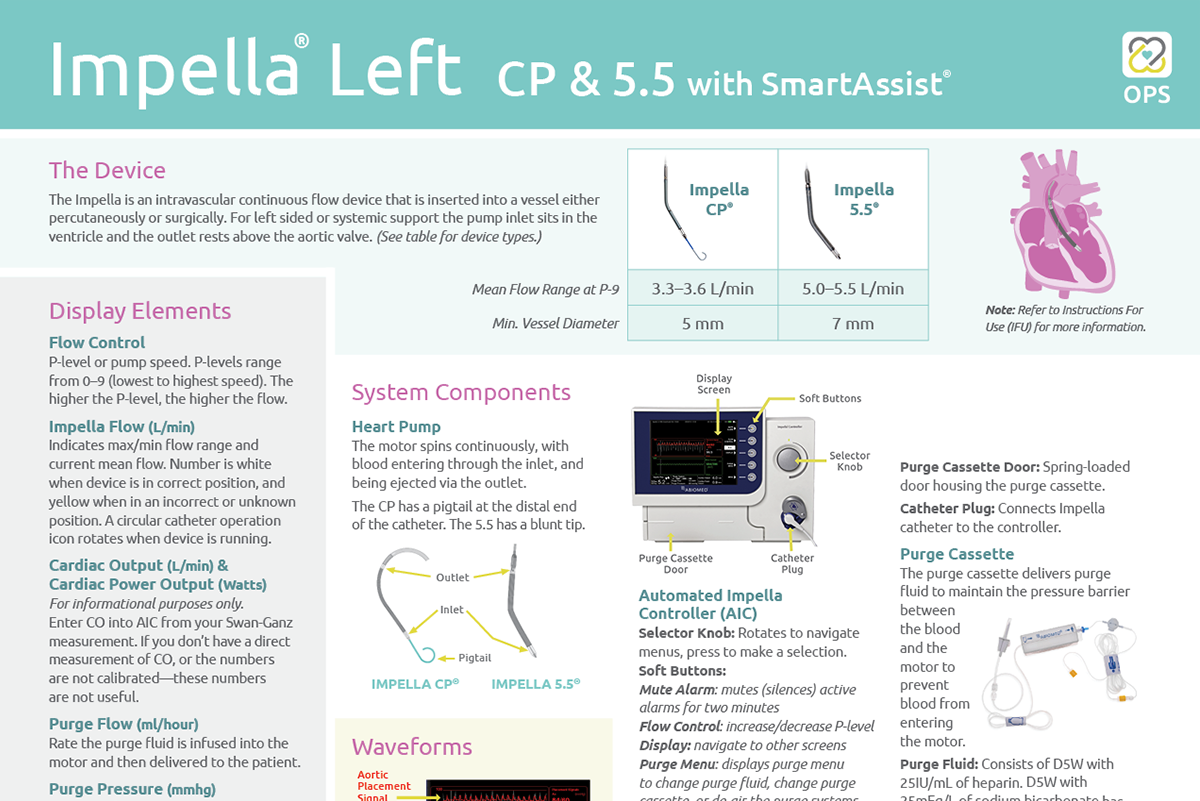
Check out our One Page Summary (OPS) featuring the Impella® Left CP and the Impella® 5.5 (with SmartAssist) for providers. It serves as a quick overview of the device, including, device selection, system components, display elements, waveforms, as well as highlighting anticoagulation, power sources and potential scenarios.
Impella®– One Page Summary (OPS) Read More »
A report describing patient and device characteristics, and outcomes through 1-year post-VAD implant. The 5-year ACTION VAD experience highlights the growing collaboration in the pediatric VAD community and changes in clinical practice. More work is needed to improve survival and limit adverse outcomes, especially in younger patients.
The ACTION VAD registry: A collective five-year experience Read More »
Innovation in pediatric medical devices is limited by financial and regulatory barriers due to the small and heterogenous target population. Intentional design of the ACTION registry has mitigated regulatory and financial barriers to pediatric VAD innovation through the use of real-world evidence gathered through a learning network.
Born with a complex congenital heart defect, Owen has faced more medical challenges in his 20 years than most do in a lifetime, however his resilience and optimism have carried him through. Today, he’s thriving as a college student with dreams of becoming a physician’s assistant and raising awareness about organ donation. His journey—from patient to future healthcare provider—is a testament to the power of perseverance, community support, and lifesaving health care.
Owen’s Story: A Journey of Resilience and Hope Read More »
Let’s make 2025 our best year yet! We wrapped 2024 with the exciting announcement for the FDA expanded label of Johnson & Johnson MedTech’s Impella Support System to include treatment for certain children suffering from heart failure. Achievements like this would not be possible without the continued efforts and dedication of our ACTION centers providing care to these patients, as well as entering, cleaning, and adjudicating the data. We also continued access to the Berlin Heart Active Driver under the extended trial, and we published many new ACTION manuscripts.
The Pulse — February 2025 Read More »
CHD patients are more likely in extremis at VAD implantation and experience higher rates of adverse events and worse survival compared to those with non-CHD. Timely referral for patients with CHD experiencing worsening heart failure and a proactive approach to VAD implantation has the potential to improve outcomes for this vulnerable cohort.