

VADs

External Validation of a Risk Score Assessment for Pediatric Ventricular Assist Device Mortality

A risk score built to predict mortality after pediatric ventricular assist device placement held up when tested against an outside dataset. Across both historical and contemporary data, it predicted death more accurately than the INTERMACS profile, the measure of pre-implant illness severity widely used in the field.

External Validation of a Risk Score Assessment for Pediatric Ventricular Assist Device Mortality Read More »

Current Global Trends and Challenges of Pediatric Ventricular Assist Device Programs: An ACTION Collaborative Survey

Ventricular assist devices are established therapy for children with end-stage heart failure, but what programs outside North America actually have access to is poorly documented. A survey of centers across 14 countries found wide variation in devices, staffing, and experience discharging patients home on support.

Current Global Trends and Challenges of Pediatric Ventricular Assist Device Programs: An ACTION Collaborative Survey Read More »

ACTION PHTS VADs before Transplant

Impact Of Ventricular Assist Device Use On Pediatric Heart Transplant Outcomes In A Linked Cohort Of The Advanced Cardiac Therapies Improving Outcomes Network (ACTION) And Pediatric Heart Transplant Society (PHTS) Databases

Children bridged to heart transplant on a ventricular assist device did not have worse graft survival than those supported medically. Drawing on 1,360 linked records from ACTION & PHTS, the study found that apparent differences between device types faded once patient complexity was accounted for.

Impact Of Ventricular Assist Device Use On Pediatric Heart Transplant Outcomes In A Linked Cohort Of The Advanced Cardiac Therapies Improving Outcomes Network (ACTION) And Pediatric Heart Transplant Society (PHTS) Databases Read More »

Survival comparison for renal replacement therapy in pediatric VAD patients versus those not on therapy, over one year.

Outcomes of ventricular assist device placement in pediatric patients with renal dysfunction requiring dialysis: an ACTION registry analysis

Children who needed renal replacement therapy at the time of VAD implantation were rare, sicker, and had lower one-year survival than other VAD patients. But after accounting for other factors, the therapy itself was not independently linked to mortality.

Outcomes of ventricular assist device placement in pediatric patients with renal dysfunction requiring dialysis: an ACTION registry analysis Read More »

Chart of concerns reported by adolescents living with a VAD at home, including emergencies, infection, and bleeding.

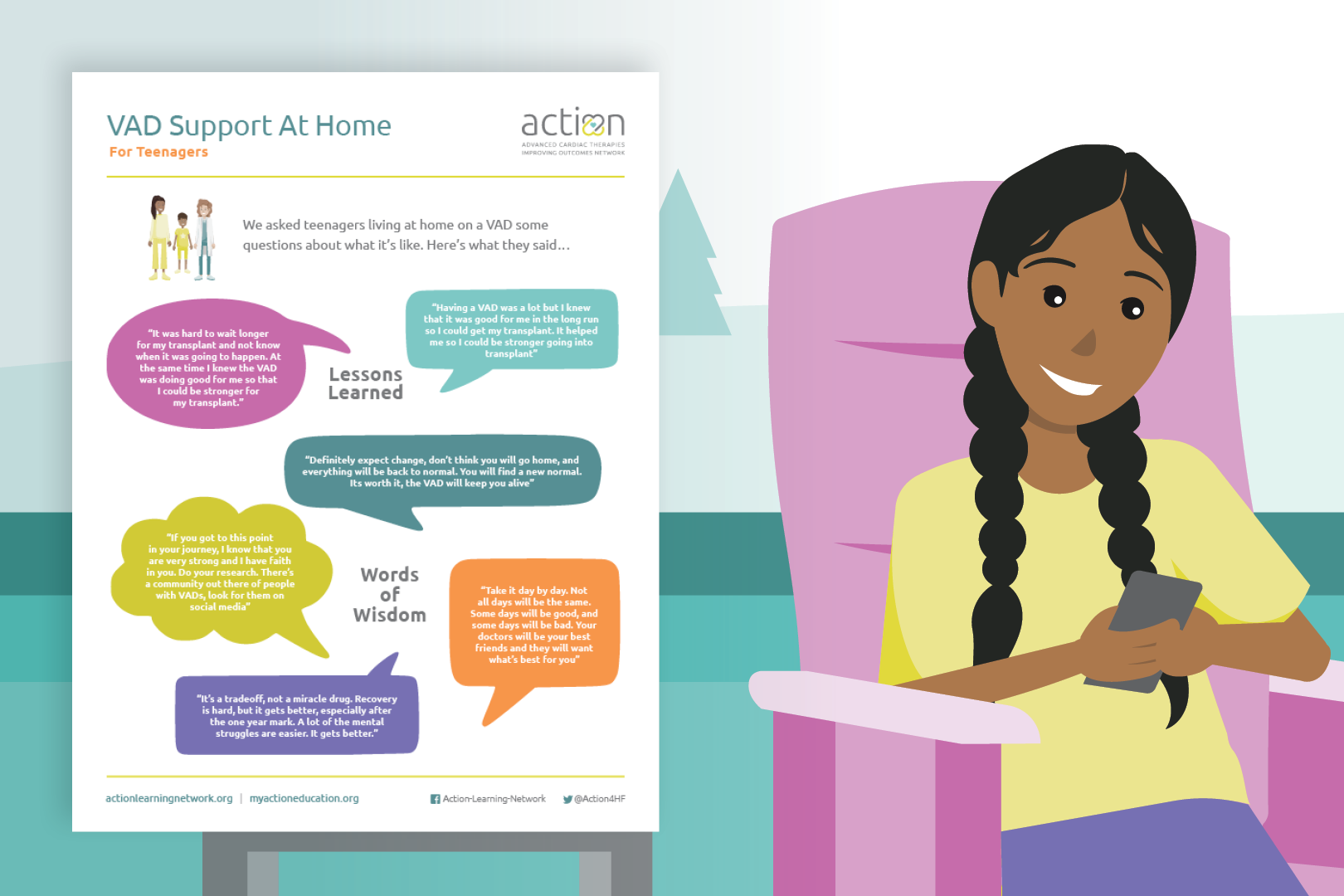
“It’s Not Like My Old Life, But It’s Still Freedom”: An ACTION Learning Network Mixed Methods Analysis of the Adolescent Ventricular Assist Device Experience at Home

Adolescents and young adults are increasingly discharged home on a ventricular assist device, but little is known about what that period is actually like. Seventeen young people interviewed across ACTION sites described worries centered on emergencies, infection, and bleeding, along with limits on friendships, sports, and freedom of movement.

“It’s Not Like My Old Life, But It’s Still Freedom”: An ACTION Learning Network Mixed Methods Analysis of the Adolescent Ventricular Assist Device Experience at Home Read More »

Comparison of pediatric VAD infection rates by device type: implanted, durable external, and temporary external.

Prevalence and Risk Factors for Ventricular Assist Device-Associated Infection in Children: An Analysis ACTION Study

About one in ten children supported by a ventricular assist device developed a device-associated infection, and one-year survival was no different for those who did. Drawing on 1,527 patients in the ACTION registry, the study found that implanted devices carried a proportionately higher infection rate than external ones.

Prevalence and Risk Factors for Ventricular Assist Device-Associated Infection in Children: An Analysis ACTION Study Read More »

RVAD timing in pediatric BiVAD support

Does Earlier Right Ventricular Assist Device Implant Confer a Survival Advantage

Concerns about survival have made biventricular support less common in children. Drawing on 223 pediatric patients in the ACTION registry, this study asked whether the timing of RVAD placement matters. Patients who received both devices in a single operation had better one-year survival, despite being sicker going into surgery.

Does Earlier Right Ventricular Assist Device Implant Confer a Survival Advantage Read More »