

What is the project focus?
Many children with cancer receive treatments that can affect the heart, such as chemotherapy or radiation given near the heart. This heart damage, called cardiotoxicity, most often weakens the heart muscle and can lead to heart failure. It can appear during treatment, shortly after, or many years into survivorship, and its severity depends on the type and dose of therapy. The ACT-ONC team is looking at various projects to strengthen collaboration between oncology and cardiology teams and improve care for the cancer survivors. Earlier identification of cardiovascular complications helps protect patients’ heart health during cancer care and beyond.
Who is impacted?
Children, adolescents, and young adults who receive cancer treatments that can affect the heart. This includes patients in active treatment, survivors in routine cardiac surveillance, and survivors facing new milestones such as transition to adult care, pregnancy, or competitive athletics. It also includes the families who help manage their care and the oncology and cardiology teams who work together to treat them.
What are we doing to help?

ACTION and the International Cardio-Oncology Society (IC-OS) developed this Cardiotoxicity & Cancer informational sheet to help patients and families understand how cancer treatments can affect the heart. It explains cardiotoxicity, treatments that may cause it, how heart health is monitored, and the role of dexrazoxane in protecting the heart during anthracycline therapy. The resource also highlights the importance of ongoing heart monitoring and the support available through cardio-oncology programs.
Coming Soon
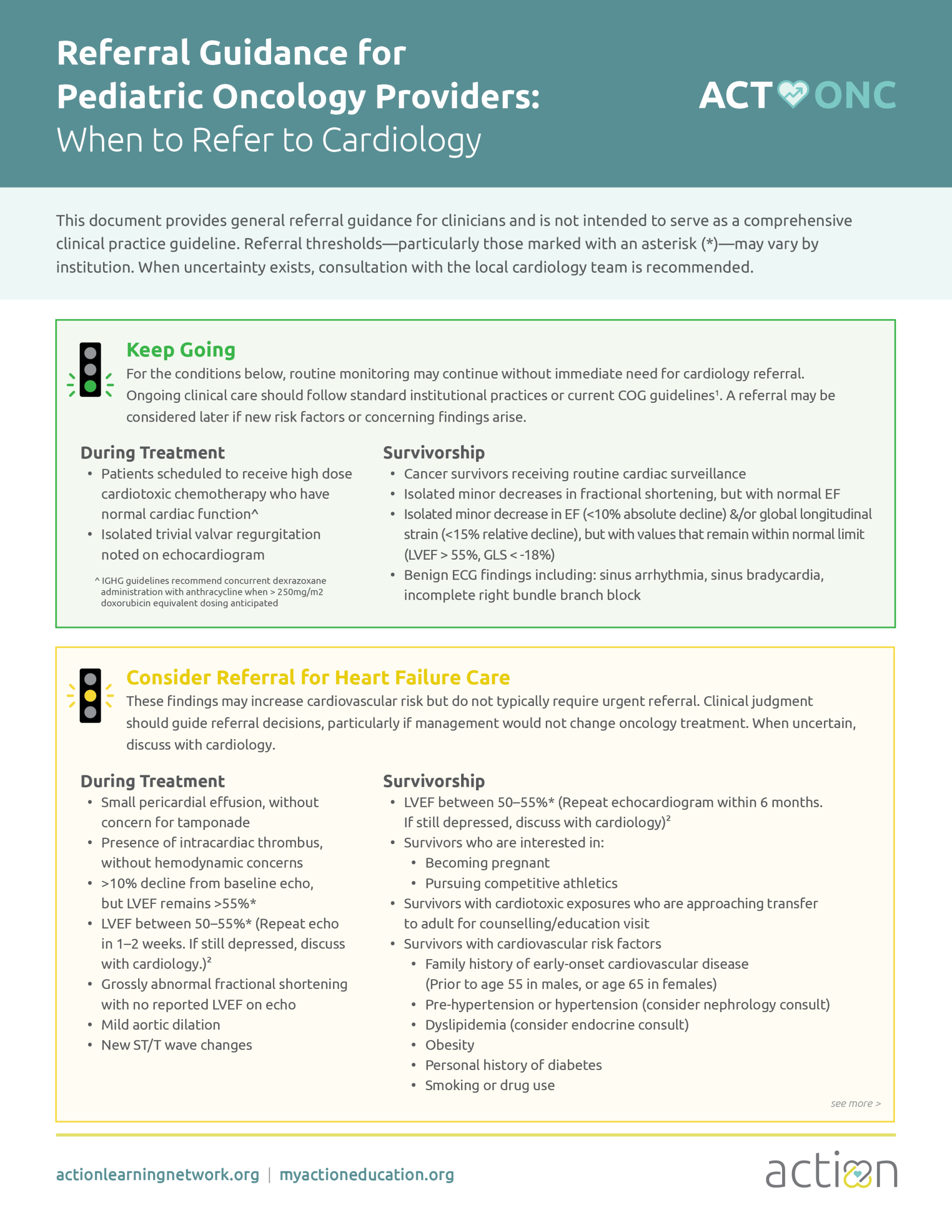
ACTION developed the Referral Guidance for Pediatric Oncology Providers: When to Refer to Cardiology to help providers determine when cardiology consultation may be beneficial during cancer treatment and survivorship. The stoplight-based guide categorizes findings as Keep Going (routine monitoring), Consider Referral for Heart Failure Care, or Referral Required, with urgency and follow-up determined by the cardiology team. It supports timely oncology-cardiology collaboration, early identification of cardiovascular complications, and appropriate cardiac care. An editable version allows sites to customize referral pathways and thresholds to local practice.
What data do we have?
The ACT-ONC Committee is collecting data on cardiology referral patterns for pediatric oncology patients across ACTION sites. Findings will be shared here as they become available.