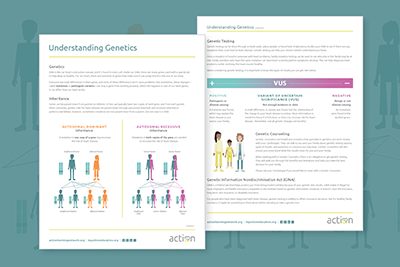
Understanding Genetics
Genetics
Understanding Genetics Read More »

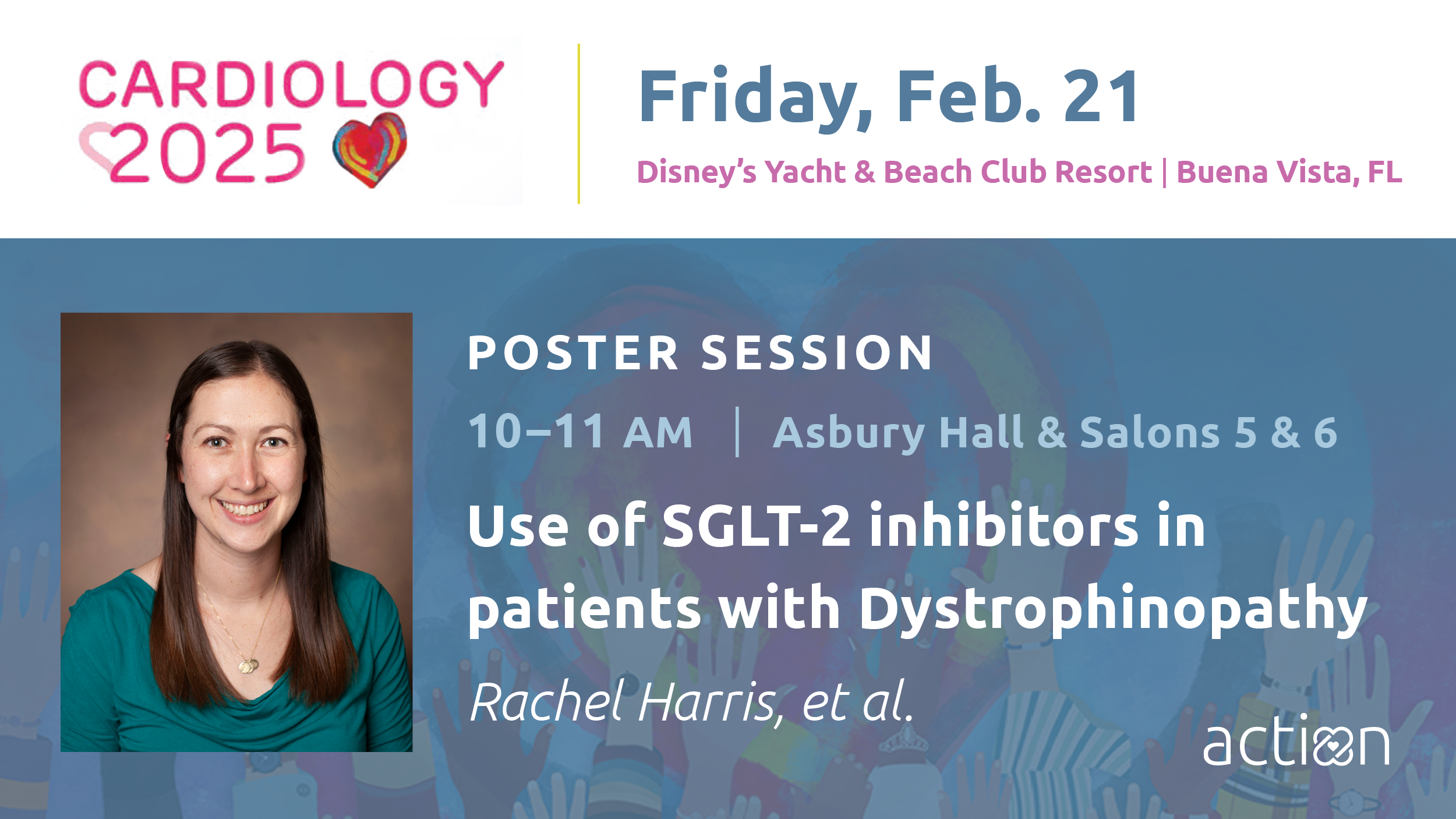
Check out our featured ACTION abstract at the Poster Session!
ACTION @ Cardiology 2025: Use of SGLT-2 inhibitors in patients with Dystrophinopathy Read More »

CHD patients are more likely in extremis at VAD implantation and experience higher rates of adverse events and worse survival compared to those with non-CHD. Timely referral for patients with CHD experiencing worsening heart failure and a proactive approach to VAD implantation has the potential to improve outcomes for this vulnerable cohort.

Partnership of cardiologists with gene transfer therapy prescribers is essential to identifing patient-specific considerations that might influence risk for adverse cardiac events.

As the Fontan population grows, understanding successful strategies for ventricular assist device (VAD) support of the failing Fontan circulation is needed. A retrospective analysis was performed of patients with Fontan circulation and systemic VAD support in the ACTION registry.
Over 100 Fontan Patients on Systemic Ventricular Assist Device Support: An ACTION Update Read More »

Patients with congenital heart disease (CHD) frequently have had valve interventions, including replacement with a mechanical valve. The impact of a mechanical valve on clinical outcomes in patients undergoing ventricular assist device (VAD) implantation is not well characterized.

In a groundbreaking achievement for pediatric heart care, the FDA has expanded the labeling of Johnson & Johnson MedTech’s Impella Support System to include treatment for certain children suffering from heart failure, extending the original approval for care of adults with heart failure.

Pediatric patients with ventricular assist devices often have access to neurodevelopmental providers in the inpatient setting, though supports vary by centre. Strengthening family neurodevelopmental education, referral processes, and family-centered psychosocial services may improve current neurodevelopmental/psychosocial care for pediatric ventricular assist device patients.

This report reviews the strengths and limitations of the ACTION registry (which collects data and adjudicates adverse events on pediatric patients receiving mechanical circulatory support at 48 participating centers) to ensure optimal utility among pediatric patients receiving mechanical circulatory support. It also suggests potential areas for improvement to facilitate best care of this vulnerable population.
Adjudicating Registry Data: Benefits and Pitfalls – The ACTION Experience Read More »